
How Close Can Visitors Get to the Gorillas during the trek in their Habitat?
Few wildlife experiences compare to standing just a few meters away from a family of endangered mountain gorillas in their natural forest habitat. Gorilla trekking offers a rare opportunity to observe these gentle giants up close while supporting conservation efforts and local communities. However, many travelers ask one important question before planning their adventure: How close can visitors get to the gorillas?
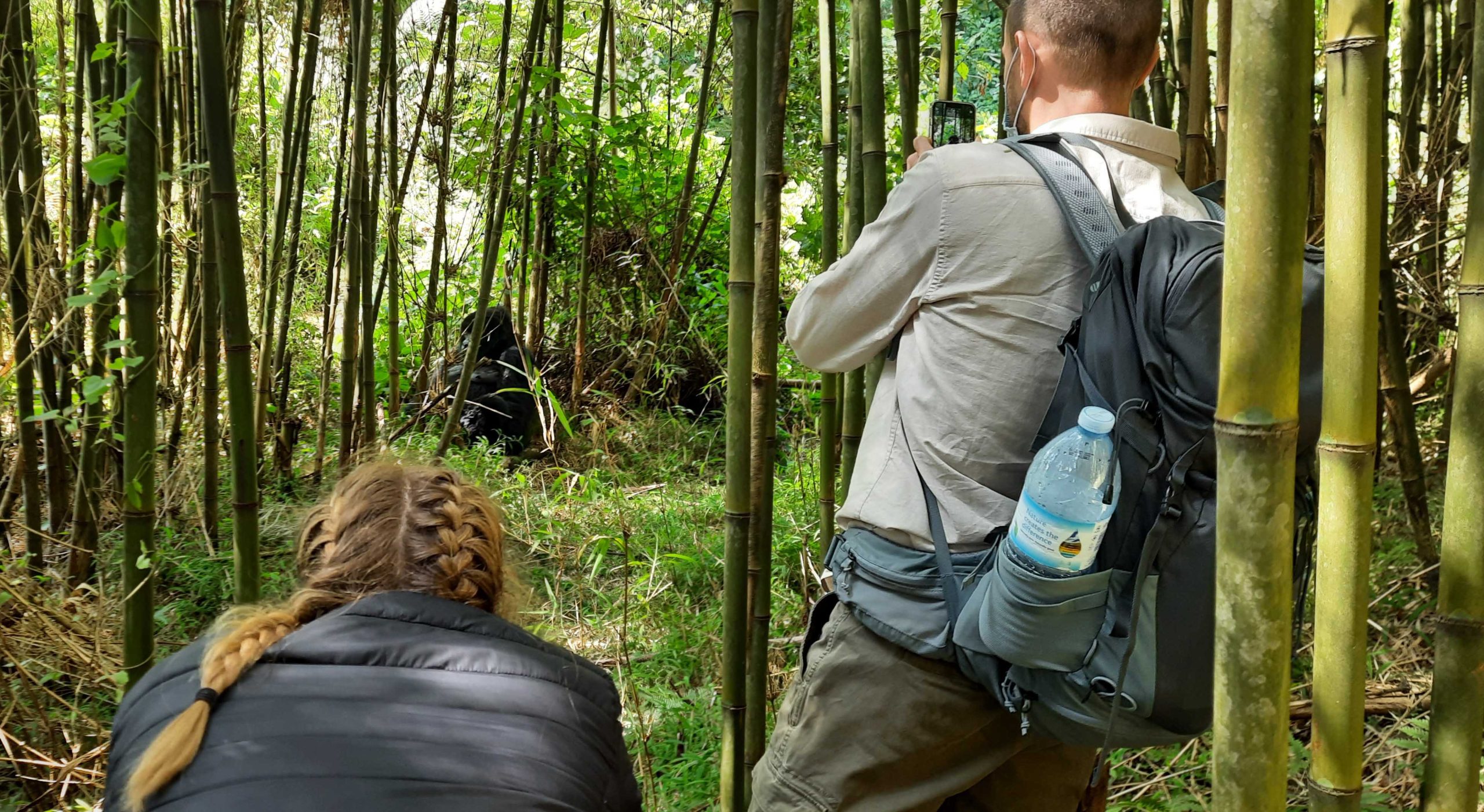
The answer is simple: visitors are required to stay at least 7 meters (about 23 feet) away from the gorillas. This distance is not arbitrary, it is a carefully established conservation guideline designed to protect both humans and gorillas.
In this guide, we’ll explain why the 7-meter rule exists, what happens during a gorilla encounter, situations where gorillas may come closer, and how to enjoy this once-in-a-lifetime experience responsibly.

The Official Gorilla Viewing Distance
National park authorities in Uganda, Rwanda, and the Democratic Republic of Congo require visitors to maintain a minimum distance of 7 meters (23 feet) from the gorillas throughout the trekking experience.
Professional park rangers and experienced guides accompany every trekking group to ensure visitors follow all conservation regulations. Before entering the forest, every trek begins with a briefing covering safety procedures, gorilla behavior, and visitor etiquette.
Maintaining this distance helps ensure that gorillas remain comfortable and continue their natural daily activities without feeling threatened.
Why Must Visitors Stay 7 Meters Away?
The viewing distance serves several important purposes.
1. Protecting Gorillas from Human Diseases
Mountain gorillas share approximately 98% of their DNA with humans, making them highly susceptible to many human illnesses.
Diseases such as:
- Common colds
- Influenza
- COVID-19
- Pneumonia
- Tuberculosis
can spread from humans to gorillas, sometimes with fatal consequences.
Because mountain gorillas have relatively small populations, even a single disease outbreak could threaten an entire habituated family.
The 7-meter rule significantly reduces the risk of airborne disease transmission.
2. Reducing Stress on the Gorillas
Although habituated gorillas are accustomed to human presence, they remain wild animals.
Crowding them or standing too close may:
- Cause unnecessary stress
- Interrupt feeding
- Disturb family interactions
- Trigger defensive behavior
Maintaining respectful space allows the gorillas to behave naturally while visitors observe quietly.
3. Ensuring Visitor Safety
Mountain gorillas are peaceful animals and generally avoid conflict. However, adult silverbacks can weigh over 180 kilograms (400 pounds) and possess immense strength.
If they perceive danger to their family, they may display defensive behaviors such as:
- Chest beating
- Loud vocalizations
- Bluff charges
- Running toward perceived threats
Following ranger instructions and maintaining the recommended distance minimizes these risks.
What Happens If a Gorilla Walks Toward You?
One of the most exciting, and surprising, moments during gorilla trekking occurs when a curious gorilla decides to approach visitors.
This is more common than many people realize.
Young gorillas are naturally playful and curious. They may wander close to visitors out of curiosity.
Adult gorillas occasionally move through the forest in directions that bring them closer than the recommended distance.
When this happens, the rule changes slightly:
Visitors should not move toward the gorilla.
Instead:
- Stay calm.
- Avoid Direct Eye Contact
- Avoid sudden movements.
- Remain quiet.
- Follow your guide’s instructions.
- Allow the gorilla to pass.
If the gorilla comes within arm’s reach, never attempt to touch it, even if it appears friendly.
The ranger will manage the situation to ensure both visitors and gorillas remain safe.
Can You Touch a Gorilla?
No.
Visitors should never intentionally touch a gorilla.
Touching gorillas poses serious health risks because diseases can spread through direct contact. Additionally, physical contact may frighten or agitate the animal.
Even baby gorillas that seem playful should not be approached.
If accidental contact occurs because a gorilla touches you, remain calm and allow the ranger to handle the situation.
 How Long Do Visitors Spend with the Gorillas?
Once your trekking group locates the habituated gorilla family, visitors are generally allowed one hour with them.
This time limit helps reduce disturbance while allowing everyone enough opportunity to:
- Observe gorilla behavior
- Take photographs
- Watch family interactions
- Learn from the guides
- Enjoy the incredible experience
Many visitors say that hour passes surprisingly quickly.
Can You Take Close-Up Photos?
Yes.
Despite the 7-meter viewing distance, modern cameras can capture incredible close-up images.
For the best photography:
- Use a zoom lens (70–200mm works well).
- Turn off your flash.
- Increase your ISO in dim forests.
- Use image stabilization.
- Shoot in burst mode for moving subjects.
Smartphones can also take excellent photos, especially when gorillas naturally move closer.
Remember that the experience itself is just as valuable as the photographs.
What If You’re Sick Before the Trek?
Visitors who have symptoms of infectious illness should not participate in gorilla trekking.
Symptoms include:
- Fever
- Persistent coughing
- Flu-like illness
- Vomiting
- Diarrhea
Although this may be disappointing, protecting endangered gorillas takes priority.
Some parks may allow you to reschedule your trek depending on permit policies and availability.
Other Important Gorilla Trekking Rules
Besides maintaining the viewing distance, visitors should follow these essential guidelines:
Speak Quietly
Loud conversations may disturb the gorillas.
Do Not Eat Near Gorillas
Food can attract wildlife and introduce unfamiliar scents.
No Flash Photography
Flash may startle gorillas.
Follow Ranger Instructions
Guides understand gorilla behavior and know how to respond to different situations.
Do Not Litter
Everything brought into the forest should be carried back out.
Avoid Direct Eye Contact with a Charging Silverback
If a silverback performs a bluff charge, remain calm and follow your guide’s directions. Running away can worsen the situation.
Why Gorilla Habituation Matters
The gorillas visited during trekking are not tame, they are habituated.
Habituation is a gradual process that takes approximately two to three years, during which researchers and rangers slowly introduce gorillas to the non-threatening presence of humans.
Even after habituation:
- Gorillas remain completely wild.
- They are free to leave at any time.
- They continue living naturally in the forest.
This balance allows tourism without domesticating the animals.
 Is the Experience Worth It from 7 Meters Away?
Absolutely.
Many first-time visitors worry that 7 meters sounds too far away.
In reality, the forest environment often creates surprisingly intimate encounters.
Large silverbacks appear enormous even at this distance, while playful juveniles swing through nearby vegetation and mothers gently care for their infants.
Sometimes the gorillas naturally move closer while feeding or walking through the forest, creating unforgettable moments that feel incredibly personal—all without visitors breaking the rules.
Supporting Gorilla Conservation
Responsible tourism has become one of the greatest success stories in wildlife conservation.
Revenue from gorilla trekking permits helps fund:
- Anti-poaching patrols
- Veterinary care
- Habitat protection
- Scientific research
- Ranger salaries
- Community development projects
By respecting viewing distances and park regulations, visitors directly contribute to protecting one of the world’s most endangered great apes for future generations.
Whether you’re planning your first trek in East Africa or simply researching this extraordinary experience, understanding the 7-meter rule is an essential part of responsible wildlife tourism. The reward is an unforgettable hour with one of our closest relatives in the wild, an encounter that leaves lasting memories while helping secure the future of mountain gorillas.
 Ready for an Unforgettable Gorilla Trekking Adventure?
Whether you’re planning to track mountain gorillas, secure your gorilla permits, or arrange airport transfers from Kigali or Entebbe, Kamere Tours has you covered. Our experienced team will handle every detail, ensuring a seamless and memorable safari experience from arrival to departure.
Contact Kamere Tours today CLICK HERE to start planning your gorilla trekking adventure and inquire about our customized safari packages!