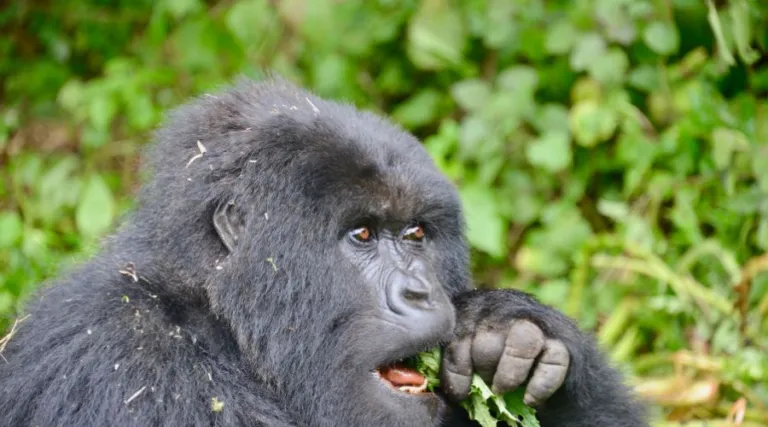
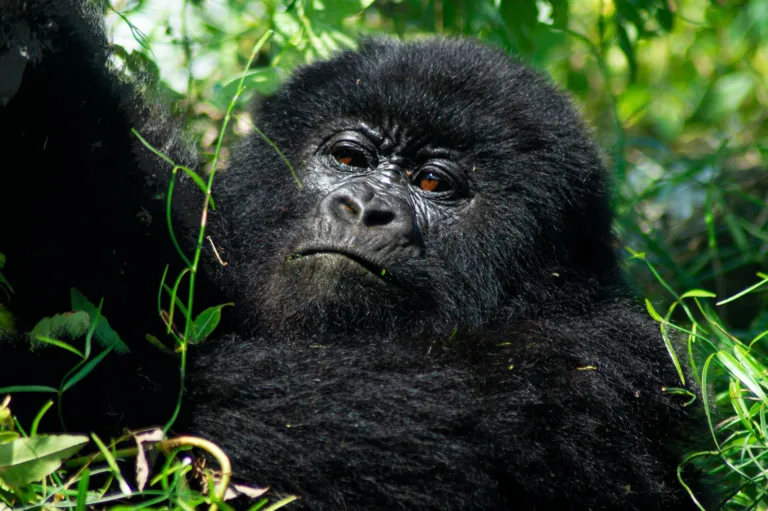
What is gorilla habituation?
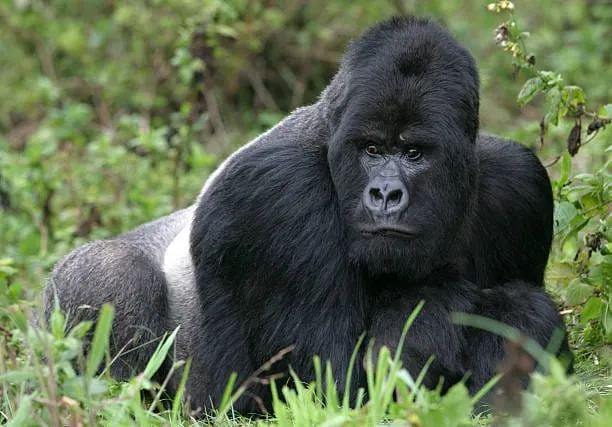
Habituation is the gradual process of getting a wild gorilla family used to the presence of humans, without changing its natural behaviour. Wild gorillas are naturally wary of people, and a silverback may charge, scream or lead his family away when approached. Over a period that usually lasts around two to three years, a team of researchers and trackers visits the same family every day, staying a little longer and approaching a little closer each time, while always respecting the gorillas’ signals. Gradually, the family learns that the visitors pose no threat.
Only when a family is calm and predictable in the presence of people is it opened for standard gorilla trekking. Habituation therefore makes gorilla tourism possible, and gorilla tourism funds the protection of the forest. Habituated families are also monitored daily, which helps rangers detect illness, injuries and threats such as snares quickly. The habituation experience allows visitors to take part in this process and see conservation in action.
How the habituation experience differs from standard trekking
| Standard gorilla trekking | Habituation experience |
|---|
| Time with gorillas | 1 hour | About 4 hours |
| Group size | Up to 8 visitors | Up to 4 visitors |
| Gorilla family | Fully habituated | Undergoing habituation |
| Who you walk with | Ranger guide, trackers, escorts | Researchers, habituators, trackers, rangers |
| Where | Uganda and Rwanda | Bwindi, Uganda only |
| Permit (foreign non-residents) | US$800 (Uganda) | US$1,500 |
| Minimum age | 15 years | 15 years |
A day on the habituation experience
Early start. The day begins with an early breakfast and a short drive to the sector headquarters, where you register and attend a briefing about the family, the habituation process and the rules for the day.
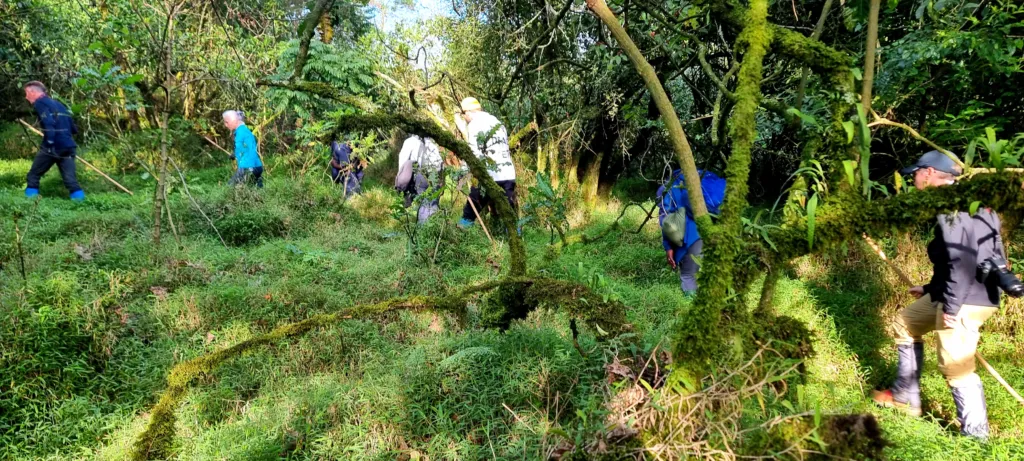
Following the trackers. The trackers set out at dawn to the place where the family nested the previous night. You follow their trail into the forest with your ranger and researchers. Because habituation families are less predictable and may move away from people, reaching them can involve long, steep walks off established trails through dense vegetation.
Your hours with the family. Once you reach the gorillas, the clock starts. Over around four hours, you watch the family feed, rest, travel and interact, while the team records observations about behaviour, health and group structure. Because the gorillas are still learning to accept people, you may witness displays, vocalisations and moments of curiosity that are rarely seen on standard treks. You also learn how researchers identify individuals, interpret behaviour and track the family’s movements.
Return. After your time with the gorillas, you walk back to the trailhead. Many guests describe the experience as the most profound wildlife encounter of their lives, and the extra time allows you to put the camera down and simply observe.
Why choose the habituation experience?
- More time. Around four hours instead of one allows you to see a wider range of behaviour and enjoy the experience without rushing.
- Smaller group. With a maximum of four visitors, the experience feels personal and quiet.
- Learning. Researchers explain the science and challenges of gorilla conservation first-hand.
- Photography. More time and changing light give far more opportunities for memorable images.
- Exclusivity. Very few permits are issued, and the experience is available only in Uganda.
Is it right for you?
The habituation experience is ideal for photographers, filmmakers, students of primatology, returning gorilla trekkers and anyone who wants a deeper, slower encounter. However, it is physically more demanding than many standard treks. You may walk for several hours off-trail on steep, muddy slopes before reaching the family, and then spend hours on your feet in dense vegetation. A good level of fitness, sturdy boots and a positive attitude are essential. If you have limited mobility or prefer a shorter day, standard gorilla trekking may suit you better.
Permits and booking
Habituation permits are issued by Uganda Wildlife Authority. At the time of writing, they cost US$1,500 for foreign non-residents, US$1,000 for foreign residents and visitors from the rest of Africa, and UGX 750,000 for East African citizens. Because only four permits are available per habituation family per day, they sell out quickly, especially from June to September and over the December holidays. We recommend booking as early as possible, ideally several months ahead. Read our full guide to gorilla permits for prices, booking steps and cancellation information.
Rules for the habituation experience
- Visitors must be at least 15 years old.
- Do not take part if you are unwell, as gorillas are highly vulnerable to human illnesses.
- Wear a face mask when requested and keep the distance advised by your team.
- Stay close to your ranger and follow all instructions, especially if the gorillas display or charge.
- Avoid sudden movements and direct, prolonged eye contact with the silverback.
- No flash photography, eating, drinking or smoking near the gorillas.
What to pack
- Waterproof hiking boots with good grip, gaiters and long socks.
- Long trousers and a long-sleeved shirt to protect against nettles and thorns.
- Gardening gloves for gripping vegetation.
- A waterproof jacket and a warm layer.
- A packed lunch, snacks and at least two litres of water.
- A camera with spare batteries and memory cards, and a rain cover.
- Your passport and permit.
Where to stay
The habituation experience usually takes place in Bwindi’s southern sector, so we recommend staying in Rushaga or Nkuringo, or around Kisoro and Lake Mutanda, which are within reach. Lodges range from simple community guesthouses to comfortable lodges with forest views. We choose accommodation close to your trailhead so that you can start early and return in time to rest.
Combine habituation with standard trekking
Many guests combine one day of habituation with one day of standard trekking with a different family, often in another sector or in Mgahinga, or across the border in Rwanda. This gives you two contrasting experiences: the deep immersion of habituation and the calm intimacy of a fully habituated family. You can also add golden monkey tracking, the Batwa Trail and a canoe trip on Lake Mutanda for a complete south-western Uganda adventure.
Conservation impact
The habituation experience directly supports the research and monitoring that protect mountain gorillas. Permit fees fund rangers, trackers and researchers, and the daily presence of teams in the forest deters poaching and allows early detection of illness. Mountain gorilla numbers have increased in recent decades, and the species was reclassified from critically endangered to endangered in 2018, a success built on careful habituation, monitoring and community support. Read more in our article on gorilla behaviour during habituation and being part of the habituation journey in Bwindi.
Gorilla behaviour you may observe
Four hours with a family gives you time to see behaviour that is easily missed in a single hour:
- Feeding: mountain gorillas spend much of the day eating leaves, stems, shoots, bark and, when available, fruit. Watching a silverback strip a stem with great precision is fascinating.
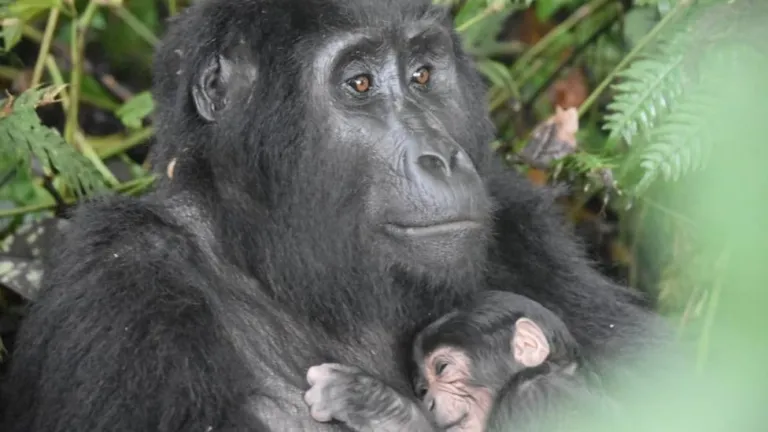
- Resting and grooming: around midday, families often rest together. Mothers groom infants, and youngsters cuddle close to adults.
- Play: juveniles wrestle, chase, climb and tumble, often testing the patience of older family members.
- Communication: gorillas use a wide range of grunts, belches, barks and screams. A deep, contented rumble often signals that all is well.
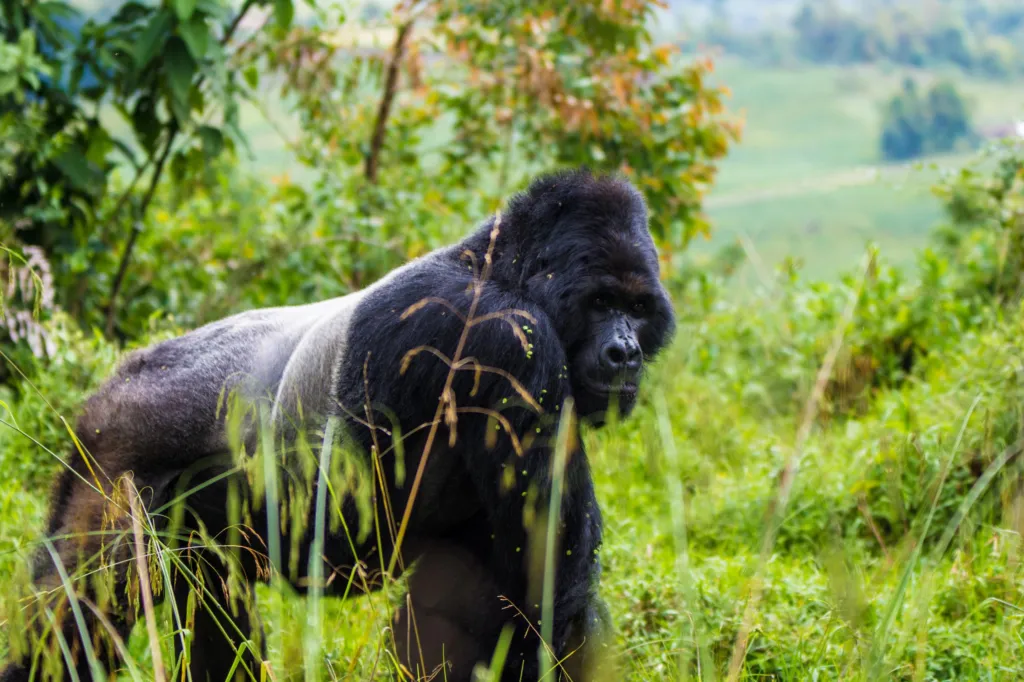
- Displays: silverbacks may beat their chests, tear vegetation or perform short charges to assert themselves. On the habituation experience, these displays can be more frequent, and your team will tell you exactly how to respond.
- Travel and nest building: you may follow the family as it moves through the forest, and see where it built its nests the night before.
Photography tips
The extended time means you can wait for the right moment rather than shooting constantly. Bwindi is a dense, often dark forest, so use a camera that handles high ISO well and set a fast enough shutter speed to avoid blur. A zoom lens in the 24–105 mm or 70–200 mm range is versatile, as gorillas can be very close or partly hidden in vegetation. Focus on the eyes, look for interactions between individuals, and use the changing light as clouds pass. Bring a dry bag, as rain can arrive suddenly. Video is also wonderful for capturing sounds and movement.
Sample itineraries with the habituation experience
- 3 days from Kigali: transfer to southern Bwindi, the habituation experience, then return to Kigali.
- 4 days double gorilla: the habituation experience in Bwindi’s southern sector and standard trekking in Mgahinga or another sector, with a canoe trip on Lake Mutanda.
- 6–7 days Uganda highlights: Lake Mburo or Queen Elizabeth for wildlife, the habituation experience in Bwindi, golden monkeys in Mgahinga and the Batwa Trail.
Every itinerary can be tailored. Tell us your dates and we will check habituation permit availability straight away.
Meet the people behind habituation
Habituation depends on dedicated people who spend almost every day of the year in the forest. Trackers, many of them from communities bordering Bwindi, read broken stems, footprints, dung and nests to follow the family. Researchers record behaviour, health and group changes, and rangers provide protection for both people and gorillas. Spending a day with this team gives you a rare insight into their skills, their knowledge of the forest and the pride they take in protecting the gorillas. Many guests say these conversations were as memorable as the gorillas themselves. Hiring a porter from the local community on your habituation day is another way to support the families who live alongside the park.
Frequently asked questions
How long is the gorilla habituation experience?
You spend about four hours with the gorilla family, plus the time it takes to reach them and return. Expect a full day in the forest.
Where can I do the gorilla habituation experience?
Only in Uganda, in Bwindi Impenetrable National Park, usually in the southern sector.
How much does a habituation permit cost?
At the time of writing, US$1,500 for foreign non-residents, US$1,000 for foreign residents and visitors from the rest of Africa, and UGX 750,000 for East African citizens.
How many people join the habituation experience?
A maximum of four visitors per family per day.
Is the habituation experience harder than standard trekking?
Usually yes. The family is less predictable, and you may walk off-trail for several hours through dense forest before spending around four hours with the gorillas.
Can I combine habituation with standard gorilla trekking?
Yes. Many guests do one day of each, with different families, for two very different experiences.