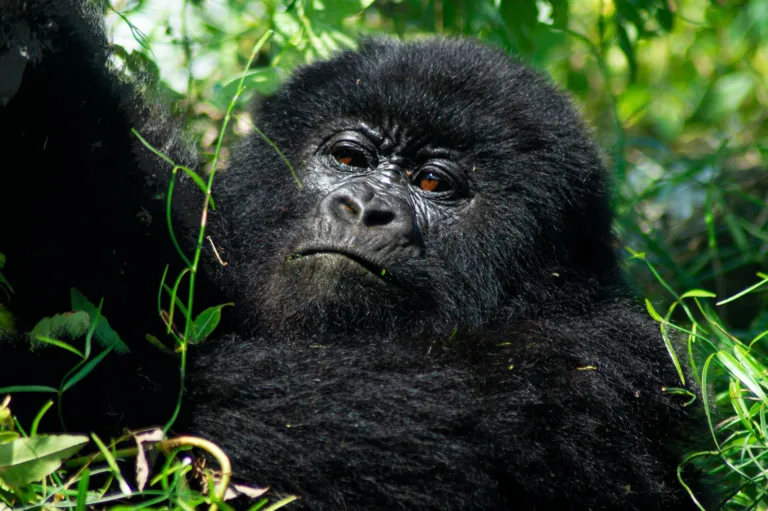
How a gorilla family is structured
A typical mountain gorilla family includes:
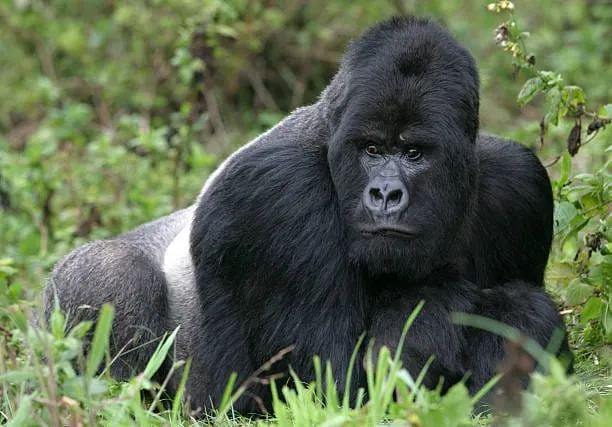
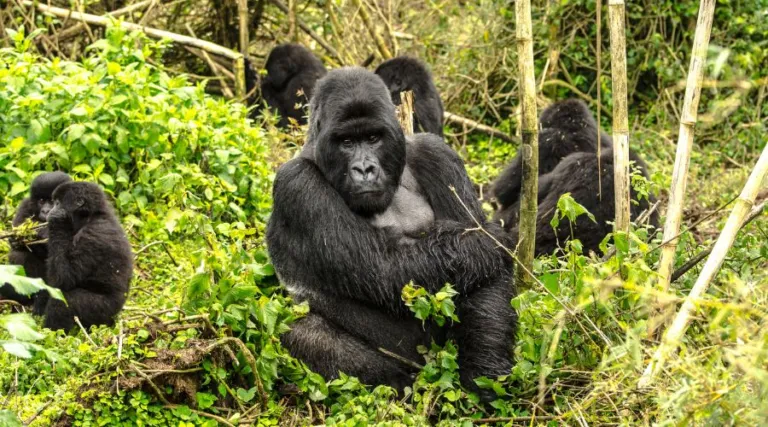
- The dominant silverback: an adult male, usually over 12 years old, named for the silver hair that develops on his back. He leads the group, decides where it travels, feeds and rests, mediates conflicts and defends the family against threats.
- Other silverbacks: some families include more than one silverback, often a son or brother of the leader, who may help defend the group and may one day take over or leave to form his own family.
- Blackbacks: younger males, roughly 8 to 12 years old, who are not yet fully mature.
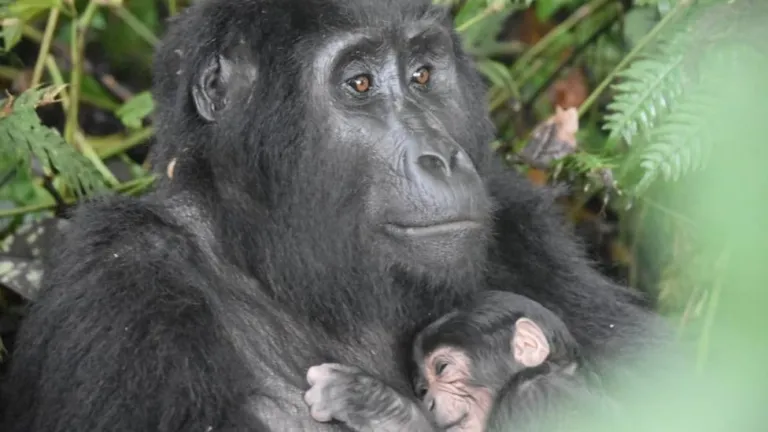
- Adult females: the core of the group. Females usually give birth to a single infant every four years or so and care for it intensively.
- Juveniles and infants: young gorillas who stay close to their mothers, play energetically and learn from the adults.
Family size varies from just a few individuals to more than twenty. Unlike chimpanzees, gorilla families usually travel and rest together as a cohesive group, which is why visitors can observe the whole family during their hour.
How families change over time
Gorilla families are dynamic. When females reach maturity, they often leave their birth family to join another group or a lone silverback, which helps prevent inbreeding. Young males may leave to live alone for a time before attracting females and forming new families. Large families sometimes split when a rival silverback leads part of the group away. Deaths, births and transfers mean that the size and make-up of each family changes from year to year, and the families listed on this page will continue to evolve.
Gorilla families in Bwindi Impenetrable National Park
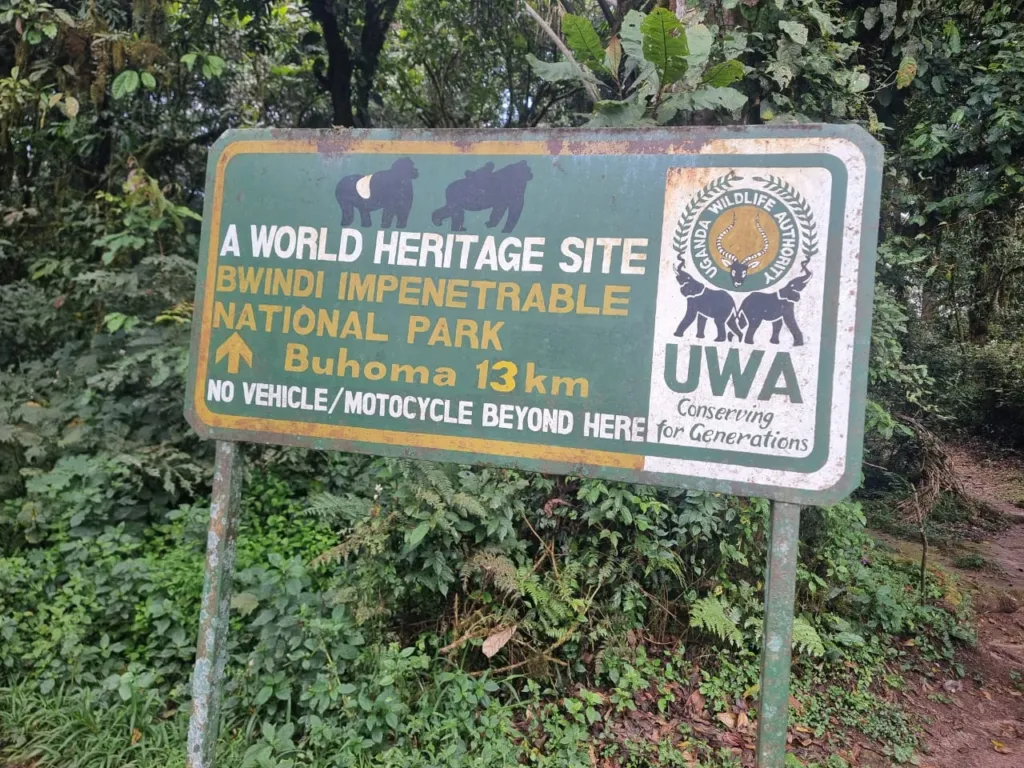
Bwindi holds the largest number of habituated families in the world, divided between four sectors. Your permit is issued for a specific sector, and rangers assign you to a family within it on the morning of your trek.
Buhoma sector (north)
Buhoma was the first sector opened for gorilla tourism in Uganda, in 1993, when the Mubare family became the country’s first habituated group. Families in this sector include Mubare, Habinyanja, Rushegura and Katwe. Buhoma is convenient for travellers coming from Queen Elizabeth National Park through Ishasha, and it has a wide choice of lodges close to the park gate.
Ruhija sector (east)
Ruhija is the highest of Bwindi’s sectors, with cooler air, beautiful views and excellent birding. Families include Bitukura and Oruzogo, along with a family used mainly for research. Treks here can involve steep descents into the valleys and a climb back up afterwards.
Rushaga sector (south)
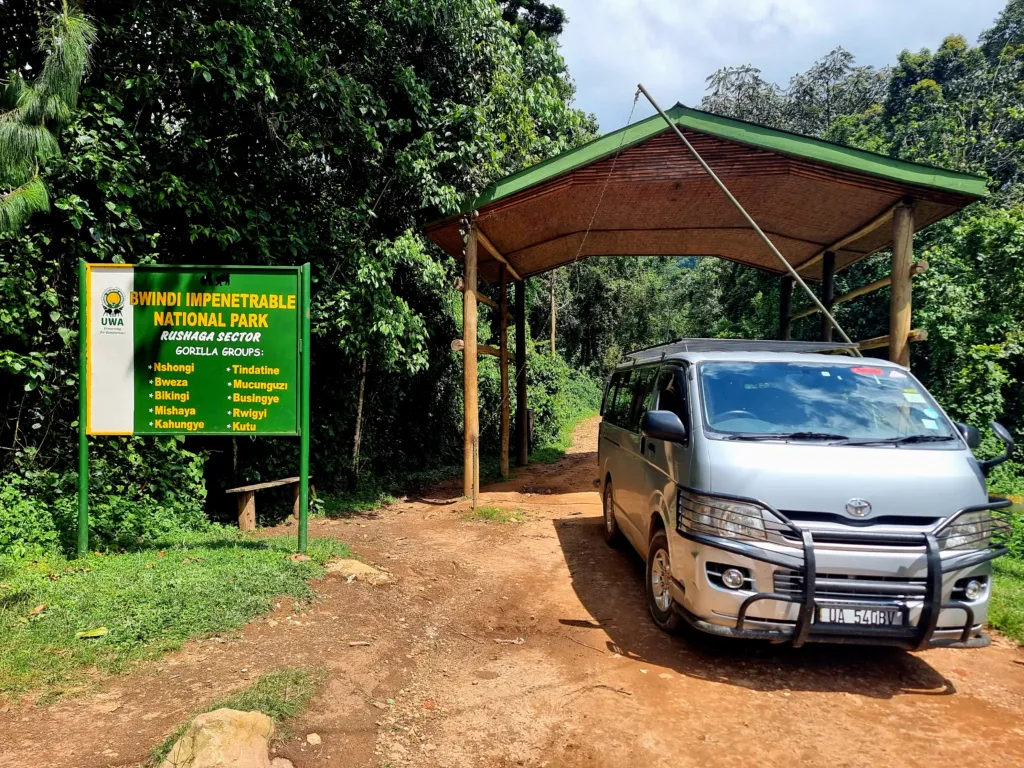
Rushaga has the most habituated families of any sector, including Nshongi, Mishaya, Kahungye, Busingye, Bweza, Mucunguzi and Rwigi, and it is where the gorilla habituation experience usually takes place. It is within easy reach of Kisoro, Lake Mutanda and Lake Bunyonyi, and of Kigali via the Cyanika or Katuna borders.
Nkuringo sector (south-west)
Nkuringo sits on a ridge with spectacular views over the forest towards the Virunga volcanoes. Families include Nkuringo, Bushaho and Christmas. The terrain is steep, and treks here are often among the more challenging in Bwindi, but the scenery is outstanding. Nkuringo is close to Kisoro.
The Nyakagezi family, Mgahinga Gorilla National Park
Mgahinga has one habituated family, Nyakagezi. In the past, the family was known for crossing the borders into Rwanda and the Democratic Republic of Congo, which made trekking here unpredictable. For many years now it has remained on the Ugandan side, and it has become one of the most rewarding families to visit, with the volcanoes of the Virunga Massif as a backdrop. Nyakagezi is famous for including several silverbacks that live together peacefully. Because there is only one family, Mgahinga permits are limited, but treks here often feel especially peaceful. Mgahinga is just outside Kisoro, our home town.
Gorilla families in Volcanoes National Park, Rwanda
Volcanoes National Park has around a dozen families habituated for tourism, along with others monitored for research. Families visited by tourists include Susa, one of the groups studied by Dian Fossey, as well as Karisimbi, Sabyinyo, Amahoro, Umubano, Agashya, Kwitonda, Hirwa, Bwenge, Ugenda and Muhoza. They range across the slopes of Karisimbi, Bisoke, Sabyinyo and Gahinga, so treks vary in length and difficulty. At the briefing in Kinigi, rangers allocate families to groups, taking fitness and preferences into account where possible.
Kwita Izina: naming the gorillas
In Rwanda, baby gorillas born during the year are given names at Kwita Izina, an annual naming ceremony inspired by the Rwandan tradition of naming newborns. Held near Volcanoes National Park, the ceremony celebrates conservation and the communities around the park, and has become an internationally known event. In Uganda, families are generally named after places, events or characteristics associated with their history.
How is your gorilla family chosen?
On the morning of your trek, rangers at the park or sector headquarters assign visitors to families. They consider how many permits have been issued for each family, and where possible they take fitness and age into account, giving shorter treks to those who need them. If you have a preference, for example for an easier walk or a particular family, tell your driver-guide, who will pass it on to the rangers. However, family assignment is ultimately the rangers’ decision, and the location of each family changes daily as the gorillas move through the forest.
Which family is the best?
There is no single best family. Every habituated family offers a remarkable experience, and the quality of your encounter depends far more on what the gorillas happen to be doing that day than on the family’s name. Some families are larger, with lots of playful youngsters; others are smaller and calmer. Some live close to the park boundary, making treks shorter; others range deep in the forest. What matters most is choosing the right sector or park for your route, fitness and accommodation, and approaching the experience with patience and respect.
Trek more than one family
Many guests trek on two days to meet two different families, often in different sectors or countries. This allows you to compare family dynamics, enjoy different landscapes and simply spend more time with the gorillas. A popular combination is Rushaga or Nkuringo in Bwindi with Nyakagezi in Mgahinga, or Bwindi with Volcanoes National Park in Rwanda.
Conservation and the future of gorilla families
Each habituated family is monitored every day by trackers and rangers, who record its location, health and changes in membership. This close monitoring allows veterinarians to respond quickly to injuries or illness, and helps rangers detect threats such as snares. The growth of mountain gorilla numbers in recent decades, and their reclassification from critically endangered to endangered in 2018, shows what this careful protection can achieve. Tourism revenue from permits funds much of this work, so every visit contributes to the future of the families you meet.
Learn more on our pages about gorilla permits, the gorilla habituation experience, the best time for gorilla trekking and gorilla trekking in Uganda and Rwanda.
A day in the life of a gorilla family
Morning. Gorillas wake soon after dawn in the nests they built the previous evening from bent branches and leaves. After leaving their nests, they begin the first long feeding session of the day, moving slowly through the vegetation as the silverback leads the way.
Midday. Around the middle of the day, the family usually settles for a long rest. Adults doze or sit quietly, mothers groom and nurse their infants, and juveniles play nearby, wrestling, climbing and chasing each other. This is often when visitors enjoy the most relaxed encounters.
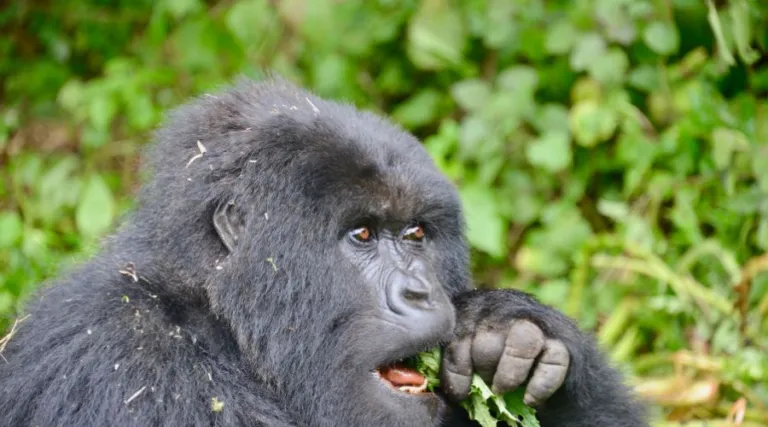
Afternoon. Feeding resumes, and the family travels to new areas of its home range in search of fresh food. Mountain gorillas eat mainly leaves, stems, shoots, roots and bark, and in Bwindi they also eat more fruit when it is in season, which can lead them to travel further.
Evening. Before dusk, each gorilla builds a new nest on the ground or in low vegetation. Infants sleep with their mothers. Trackers use these nests the following morning to find the family again, starting the cycle anew.
Meeting a family respectfully
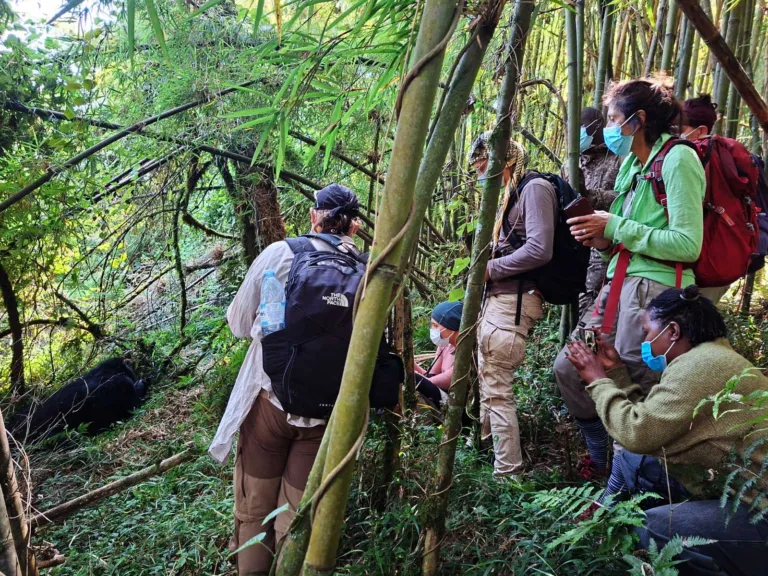
Gorilla families are calm in the presence of visitors because of years of careful habituation, but they remain wild animals. Keep your voice low, avoid sudden movements and stay with your group. If a silverback approaches or displays, follow your ranger’s instructions, crouch down and avoid direct eye contact. By respecting the family’s space, you help ensure that the gorillas remain relaxed and that future visitors can enjoy the same privilege.
Why Kisoro is the ideal base
Kisoro sits between the southern sectors of Bwindi, Mgahinga and the Rwandan border, putting more than half of the region’s habituated families within easy reach. From our home base, we can arrange treks with families in Rushaga, Nkuringo and Mgahinga, and across the border in Volcanoes National Park, often without changing accommodation. Our guides know the sectors, trailheads and rangers well, and they make sure you arrive rested and prepared for your encounter.
Frequently asked questions
How many gorilla families can be visited in Uganda?
Uganda has more than twenty habituated families, most of them in Bwindi Impenetrable National Park, with one family, Nyakagezi, in Mgahinga.
How many gorilla families are there in Rwanda?
Volcanoes National Park has around a dozen families habituated for tourism, plus others monitored for research.
Can I choose which gorilla family to visit?
Your permit is for a park or sector. Rangers assign families on the morning of your trek, taking fitness into account where possible.
How many gorillas are in a family?
Families range from a few individuals to more than twenty, usually led by a dominant silverback.
Which sector has the most gorilla families?
Rushaga, in the southern part of Bwindi, has the largest number of habituated families.