The Congo Nile Trail, Rwanda
The Congo Nile Trail follows the eastern shore of Lake Kivu for more than two hundred kilometres, from Rubavu (Gisenyi) in the north to Rusizi (Cyangugu) in the south. Its name comes from the ridge it follows, which divides the Congo and Nile river basins. The route uses dirt roads and tracks through hillside villages, coffee and tea plantations and eucalyptus groves, with near-constant views over the lake and its islands.
Riding the full trail typically takes four to six days, with overnight stops in lakeside towns such as Kinunu, Karongi (Kibuye) and Nyamasheke, or in simple guesthouses and campsites along the way. It is a demanding ride, with long climbs and rough surfaces, but sections can be ridden in a day or two, and the support vehicle makes it accessible to keen leisure cyclists. Along the way you can visit coffee washing stations, join a boat trip to the islands and swim in the lake.
Cycling safari in Lake Mburo National Park
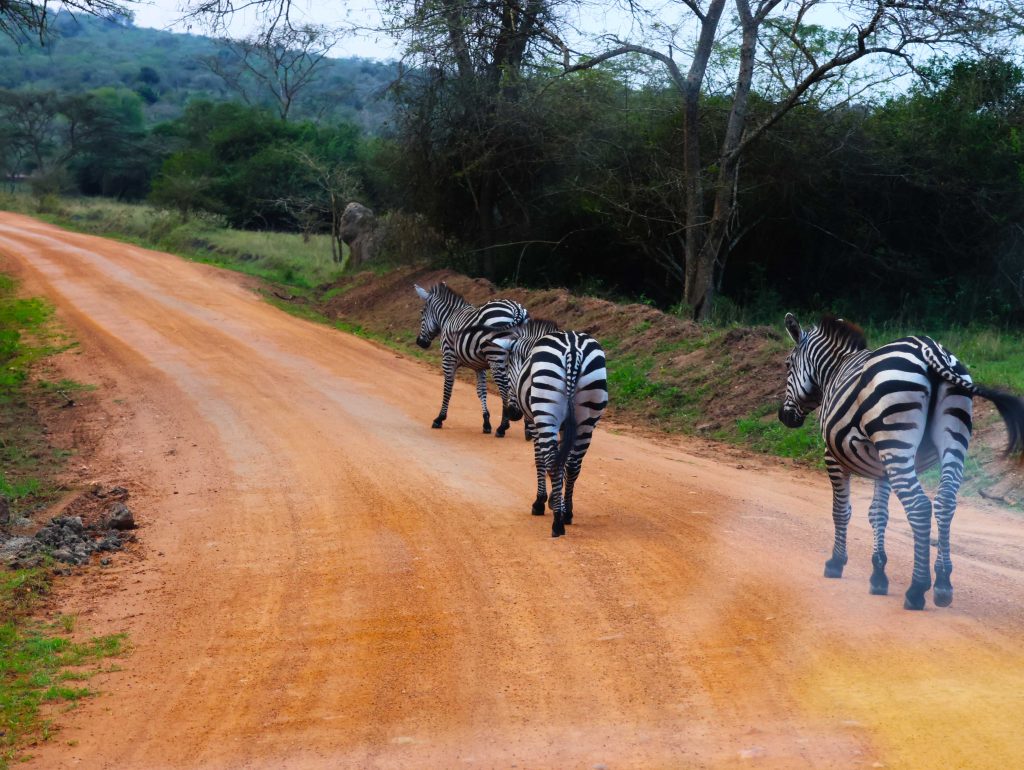
Lake Mburo is one of the few national parks in East Africa where you can cycle among wild animals. Because the park has no lions, guided cycling safaris are allowed on designated tracks, accompanied by a ranger. Pedalling quietly through acacia woodland and open grassland, you can ride surprisingly close to zebras, impala, eland, topi, warthogs and buffalo, with the rider’s view giving a real sense of being part of the landscape. Cycling safaris usually take place in the early morning or late afternoon and can be combined with a boat trip on the lake and a game drive. Lake Mburo is on the main route from Entebbe and Kampala to the gorilla parks of the south-west, so it fits naturally into many safaris.
Cycling around Kisoro, Lake Mutanda and Lake Bunyonyi
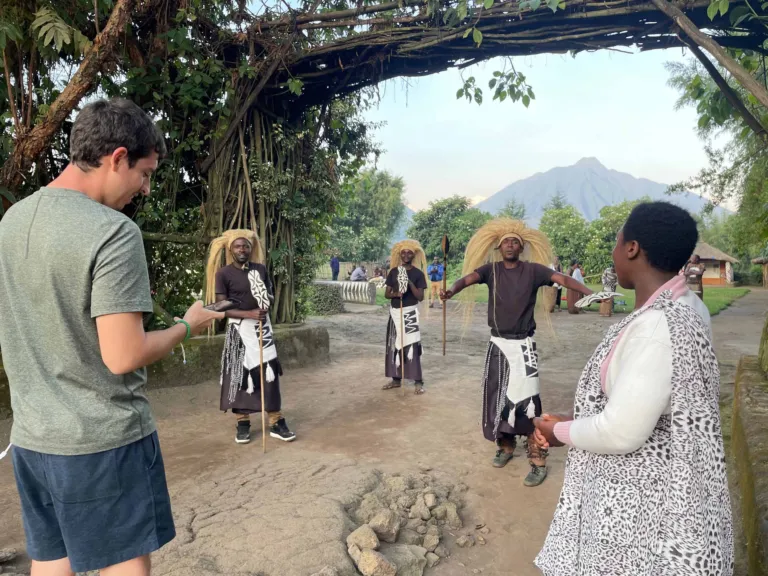
Our home region in south-western Uganda is a wonderful place to ride. Quiet village roads around Kisoro wind between terraced fields with the Virunga volcanoes always on the horizon. A ride to Lake Mutanda brings you to one of Uganda’s most photogenic lakes, with islands and the volcanoes reflected in the water, and you can switch from bike to canoe for the return. Around Lake Bunyonyi near Kabale, hilly trails follow the shoreline and ridges, passing farms, schools and markets, with endless views over the lake’s many islands.
These rides are flexible and sociable. Our cycling guides know the communities along the way, so stops are often unplanned: a visit to a blacksmith, a village school, a banana beer brewer or a family farm. They are ideal for a rest day between gorilla trekking and golden monkey tracking.
More cycling ideas
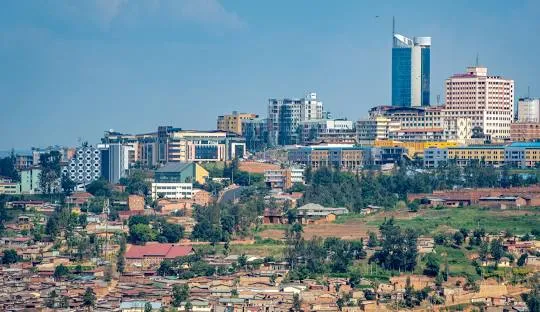
- Kigali: explore the city’s hills, markets and memorials by bike with a local guide. Kigali also holds regular car-free days, when main roads are opened to cyclists, runners and walkers.
- Fort Portal crater lakes: ride between crater lakes and tea estates near Kibale National Park, combined with chimpanzee tracking.
- Jinja and the source of the Nile: trails through villages and sugar and tea plantations near the Nile.
- Sipi Falls and Mount Elgon: challenging mountain rides on the slopes of Elgon, with waterfalls and coffee farms.
- Rwanda’s countryside: rides between Musanze, the twin lakes of Burera and Ruhondo, and the foothills of the Virungas.
How fit do you need to be?
Uganda and Rwanda are hilly, so some cycling fitness helps. Village rides around Kisoro, Bunyonyi and Kigali can be adapted for beginners and families, with shorter routes and plenty of stops. Lake Mburo cycling safaris are on gentle terrain and suitable for most people who are comfortable on a bike. The Congo Nile Trail and Elgon rides are more demanding and best for experienced cyclists, although the support vehicle means you never have to ride sections you prefer to skip. Altitude, heat and rough surfaces all add to the effort, so we plan distances realistically.
Bikes, equipment and support
We provide mountain bikes suited to the terrain, with helmets and basic repair kits, and our cycling guides carry tools and spares. On longer rides, a support vehicle carries luggage, water and snacks and can pick up tired riders. If you prefer to bring your own saddle, pedals or shoes, you are welcome to. We recommend padded cycling shorts, gloves, sunglasses, sunscreen, a light rain jacket and a hydration pack.
Road safety and etiquette
Our routes avoid busy highways wherever possible, and guides ride with you to navigate and communicate with local people. Greet people as you pass, ride slowly through villages and markets, and ask before taking photographs. Children often run alongside cyclists, which is part of the fun, but please do not hand out sweets or money; if you would like to support a community, we can suggest a school or project to visit.
When to go cycling
The drier months, roughly June to September and December to February, are best, as dirt roads are firmer and less muddy. Early morning and late afternoon rides avoid the strongest midday heat. In the wetter months, rides are still possible but routes may be shortened or adjusted after heavy rain.
Combining cycling with your safari
Cycling combines well with almost any safari. A popular Rwanda itinerary pairs gorilla trekking in Volcanoes National Park with several days on the Congo Nile Trail and a finish at Nyungwe Forest for chimpanzee tracking. In Uganda, a cycling safari in Lake Mburo, a ride around Kisoro and a canoe on Lake Mutanda make perfect additions to a gorilla trip. See also our cultural tours and climbing and hiking pages for more active ideas.
The Congo Nile Trail stage by stage
Every group is different, so we adjust daily distances to your fitness and interests. A typical five-day ride might look like this:
- Day 1: Rubavu to Kinunu. Leave the lakeside town of Rubavu and climb into the hills, passing fishing villages and the first coffee plantations. Overnight near a coffee washing station at Kinunu.
- Day 2: Kinunu to Karongi. A day of steep climbs and rewarding descents with sweeping views of the lake’s inlets and islands. Arrive in Karongi (Kibuye), one of the prettiest towns on Lake Kivu.
- Day 3: Rest day in Karongi. Take a boat trip to the islands, swim, or simply relax by the lake.
- Day 4: Karongi to Nyamasheke. Ride through tea and coffee country, with quieter roads and frequent village stops.
- Day 5: Nyamasheke to Rusizi. Final stage to the southern end of the lake, with the option to continue to Nyungwe Forest for chimpanzee tracking.
A typical cycling day
Days start early to make the most of cooler temperatures. After breakfast, your guide briefs you on the route, and you set off at your own pace, with regular stops for water, photographs and conversations with people along the way. Lunch is often a picnic at a viewpoint or a simple meal in a local restaurant. Most riders finish by mid-afternoon, leaving time to relax, explore or enjoy a lakeside sunset. The support vehicle is never far away.
What to pack for a cycling safari
- Padded cycling shorts and breathable tops.
- Cycling gloves and sunglasses.
- A light rain jacket and a warm layer for cool mornings.
- Sunscreen, lip balm and insect repellent.
- A hydration pack or water bottles.
- Comfortable clothes and shoes for evenings and village visits.
- A small first-aid kit with blister plasters and any personal medication.
Coffee, tea and community along the way
Many cycling routes pass through the coffee and tea country that is so important to rural livelihoods in Rwanda and Uganda. We can arrange visits to coffee washing stations to see how cherries are processed, tea estates where you can watch picking, and community cooperatives producing baskets, crafts and food. These stops give real insight into daily life and ensure that your ride brings benefits to the people you meet along the way.
Sample cycling itineraries
- Half-day Kisoro village ride: farms, markets and viewpoints over the Virunga volcanoes, ideal after gorilla trekking.
- Full-day Lake Mutanda ride and paddle: cycle to the lake, picnic on the shore and return by dugout canoe.
- Lake Mburo cycling safari: a morning ride among zebras and impala, followed by a boat trip and an afternoon game drive.
- Congo Nile Trail (4–6 days): the full lakeshore journey from Rubavu to Rusizi, or a two-day highlights section.
- Gorillas and Lake Kivu by bike (7–8 days): gorilla trekking in Volcanoes National Park, the northern half of the Congo Nile Trail and a relaxing finish in Karongi.
Why cycle with Kamere Tours
We are a local team from Kisoro who know the back roads, communities and viewpoints of south-western Uganda and northern Rwanda. We plan rides that match your ability, provide reliable bikes and support, and combine cycling seamlessly with gorillas, wildlife and culture. Tell us how much you would like to ride and we will design the perfect cycling safari for you.
Cycling with children
Families with older children who are confident on a bike can enjoy many of our shorter rides. Village loops around Kisoro and Lake Bunyonyi can be kept short and flat where possible, with plenty of breaks, and the Lake Mburo cycling safari is a thrilling way for young riders to see zebras up close under the watchful eye of a ranger. A support vehicle is always on hand for tired legs, and if you tell us the ages of your children in advance, we will plan suitable bikes and routes. Cycling days are a great counterbalance to longer drives, giving children the chance to burn off energy and meet other children along the way.
Frequently asked questions
Can beginners join a cycling safari?
Yes. Village rides and Lake Mburo cycling safaris can be adapted for beginners and families, with short distances and a support vehicle.
How long is the Congo Nile Trail?
The trail runs for more than two hundred kilometres along Lake Kivu. Riding the full route usually takes four to six days, but shorter sections are possible.
Can I cycle among wildlife?
Yes. In Lake Mburo National Park, guided cycling safaris allow you to ride among zebras, impala and other animals, because the park has no lions.
Do you provide bikes?
Yes. We provide mountain bikes, helmets and a support vehicle. You are welcome to bring your own saddle, pedals or shoes.
Is cycling safe in Uganda and Rwanda?
Our routes use quiet roads and tracks wherever possible, and you ride with experienced local guides and a support vehicle.